iReady Diagnostic assessments are powerful tools used by educators to measure student progress in reading and math. These adaptive tests adjust to each student’s ability level, providing detailed insights into their strengths and areas for improvement. Understanding iready diagnostic scores by grade level helps parents and teachers support student growth effectively.
What Are iReady Diagnostic Assessments?
The iReady Diagnostic is an adaptive test that evaluates a student’s proficiency in reading and mathematics. Unlike traditional standardized tests, iReady adjusts question difficulty based on the student’s responses, ensuring a precise measurement of their skills.
How iReady Diagnostic Scores Work
iReady provides several key metrics:
- Overall Scale Scores: These scores represent a student’s overall ability in the subject.
- Grade-Level Placement: Indicates whether a student is performing below, at, or above grade level.
- Domain Scores: Breaks down performance into specific skill areas (e.g., phonics, algebra).
Scores are categorized into three performance levels:
- Below Grade Level
- At Grade Level
- Above Grade Level
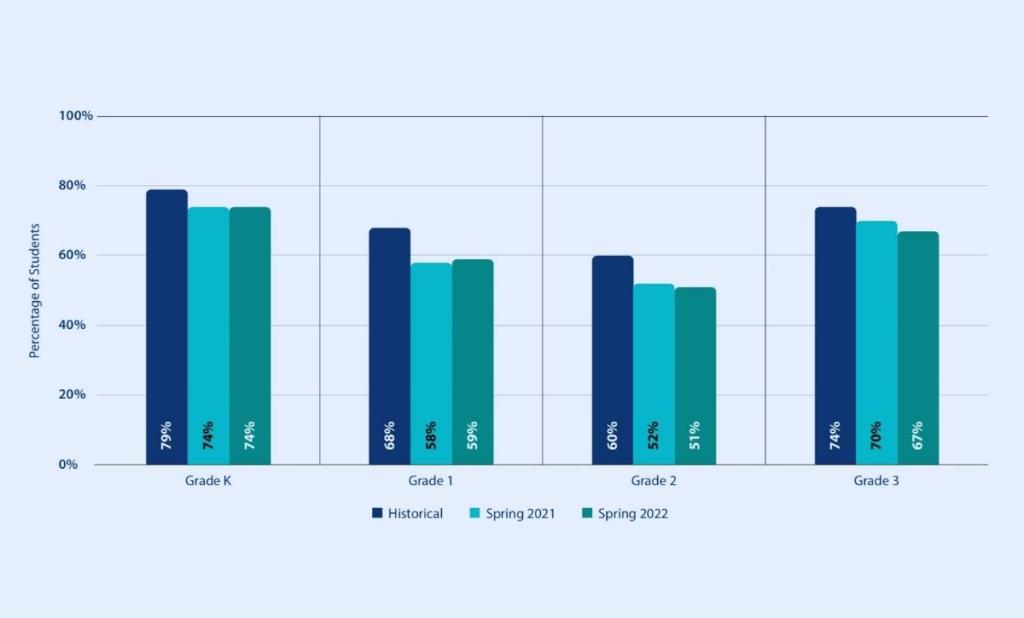
iReady Diagnostic Score Ranges by Grade
iReady scores vary by grade level and subject. Below, we break down typical score ranges for reading and math.
iReady Reading Diagnostic Scores by Grade
Reading assessments measure comprehension, vocabulary, and critical thinking skills. Here are the general scale score ranges for each grade level:
Kindergarten
- Below Grade Level: Below 321
- At Grade Level: 321–375
- Above Grade Level: 376+
1st Grade
- Below Grade Level: Below 347
- At Grade Level: 347–422
- Above Grade Level: 423+
2nd Grade
- Below Grade Level: Below 401
- At Grade Level: 401–464
- Above Grade Level: 465+
3rd Grade
- Below Grade Level: Below 448
- At Grade Level: 448–516
- Above Grade Level: 517+
4th Grade
- Below Grade Level: Below 482
- At Grade Level: 482–538
- Above Grade Level: 539+
5th Grade
- Below Grade Level: Below 506
- At Grade Level: 506–562
- Above Grade Level: 563+
6th Grade
- Below Grade Level: Below 526
- At Grade Level: 526–582
- Above Grade Level: 583+
7th Grade
- Below Grade Level: Below 540
- At Grade Level: 540–598
- Above Grade Level: 599+
8th Grade
- Below Grade Level: Below 556
- At Grade Level: 556–616
- Above Grade Level: 617+
iReady Math Diagnostic Scores by Grade
Math assessments evaluate number sense, operations, algebra, and geometry. Below are typical score ranges:
Kindergarten
- Below Grade Level: Below 326
- At Grade Level: 326–380
- Above Grade Level: 381+
1st Grade
- Below Grade Level: Below 357
- At Grade Level: 357–424
- Above Grade Level: 425+
2nd Grade
- Below Grade Level: Below 406
- At Grade Level: 406–469
- Above Grade Level: 470+
3rd Grade
- Below Grade Level: Below 451
- At Grade Level: 451–516
- Above Grade Level: 517+
4th Grade
- Below Grade Level: Below 485
- At Grade Level: 485–541
- Above Grade Level: 542+
5th Grade
- Below Grade Level: Below 508
- At Grade Level: 508–564
- Above Grade Level: 565+
6th Grade
- Below Grade Level: Below 528
- At Grade Level: 528–584
- Above Grade Level: 585+
7th Grade
- Below Grade Level: Below 542
- At Grade Level: 542–600
- Above Grade Level: 601+
8th Grade
- Below Grade Level: Below 558
- At Grade Level: 558–618
- Above Grade Level: 619+
How to Interpret iReady Diagnostic Scores
Understanding what these scores mean can help guide instruction and support.
Below Grade Level
Students scoring below grade level may need additional support, such as targeted interventions or extra practice in specific skill areas.
At Grade Level
Students performing at grade level are meeting expectations. Continued practice and enrichment can help maintain progress.
Above Grade Level
Students scoring above grade level may benefit from advanced challenges to further develop their skills.
Tips for Improving iReady Diagnostic Scores
- Regular Practice: Consistent use of iReady lessons helps reinforce skills.
- Target Weak Areas: Focus on domains where scores are lowest.
- Encourage Reading: For reading scores, daily reading improves comprehension and vocabulary.
- Math Drills: Practice math problems regularly to build fluency.
- Parent-Teacher Collaboration: Work with educators to create a personalized learning plan.
Conclusion
iReady Diagnostic scores provide valuable insights into a student’s academic progress in reading and math. By understanding grade-level expectations and interpreting score ranges, parents and teachers can better support student growth. Regular practice, targeted interventions, and collaboration between home and school are key to helping students achieve their full potential.
Would you like more detailed strategies for improving iReady scores? Let us know in the comments!

 iReady Diagnostic Scores by Grade 2025-2026